Rotating Toys
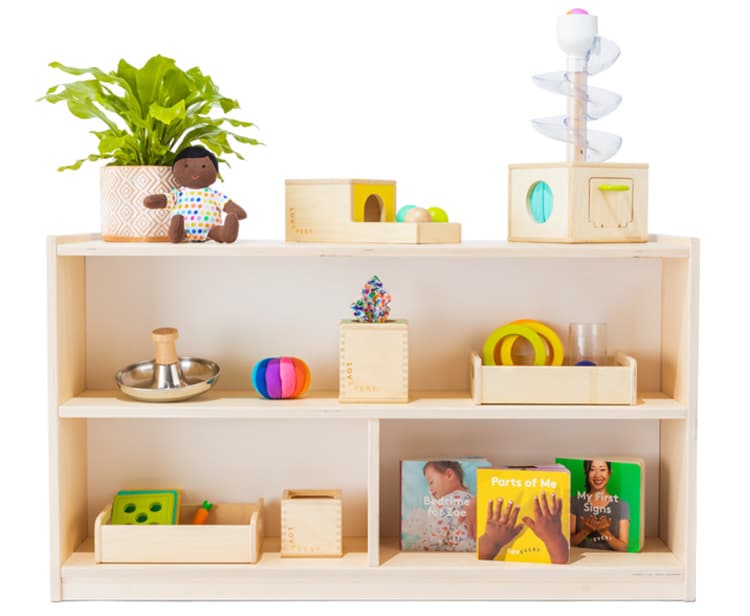
Maria Montessori’s teachings on the importance of order and structure in children’s environment are aligned with the concept of toy rotation. She discovered that children with calm and well-organized spaces exhibited increased focus and independence. Though the concept of toy rotation was not created by Maria Montessori, it complements her work. The age at which a child should begin to rotate toys will depend on the child’s developmental stage and the situation at hand.
Children can focus better on fewer toys at a time and play with each of them on a deeper level. Rotating toys encourages patience and creativity as well as promotes decluttering play spaces. A child will be more inclined to ask for new toys when he or she notices a bin that is empty. Rotating toys can save parents money because the same child will ask for new toys if they see that their favorites are missing.
Toy Rotation for Creative Development
Using a toy rotation strategy is a simple way to boost your child’s creative development. You can implement toy rotation at any age. The first step is taking an inventory of all of your child’s toys. It’s important to see what your child plays with and toss out any that don’t get played with very often. This will also allow you to refine your gift list. After all, your child won’t get bored with old toys!
It’s easy to set up a rotation system, particularly if you rotate toys on the same day every time. But if you want to keep it simple and manageable, try rotating toys on a monthly, quarterly, or weekly basis. This will give your child new and exciting toys to play with. In addition, rotating toys can also help your child learn new skills by playing with different types of toys. The key is to have a variety of toys to stimulate your child’s creative development.
Create a Space that Encourages Independence
Rotating toys encourages independent play. Rotating toys encourages your child’s creativity, problem-solving skills, and reduces boredom. The same toys, especially those with open-ended parts, are good for this. Rotate toys according to your child’s age – toddlers will probably need rotation more frequently than preschoolers. The key to this method is to keep it exciting for both you and your child.
Open shelves and shallow baskets encourage exploration. Toys placed in such a way will encourage children to take turns with them. Keeping everything well-organized also makes clean-up time a breeze. Besides, well-organized spaces encourage independence and respect for the environment. Children enjoy learning about their environment, so they want to keep it tidy. They need space to play. And they will feel good about their own space if they can put everything back.
The Perfect Play Space
We started Nilo Toys in the first place because of how well our homemade play table performed. Not only did our children maintain a cleaner playing environment, but they also stayed focused and had fun for hours at a time. Even our friends with toddlers from local schools were in awe as they watched their kids peacefully play around the Nilo tables.
Shop Now for more information on Nilo Play Tables and Storage Solutions.
Watch the video below to get more toy rotation and organization ideas!
Do you like this?LikeLike0
Be the first one to like this.
Please wait...